Know What You Have, Know What You Need and Stop Losing Margin to Stock That Sits or Orders That Slip: Practical AI tools Northern Ireland wholesalers and distributors can put to work right now
In wholesale and distribution, margin is thin and the room for error is thinner. The businesses pulling ahead right now are not the ones with the biggest warehouses. They are the ones that finally know what is actually happening inside them.
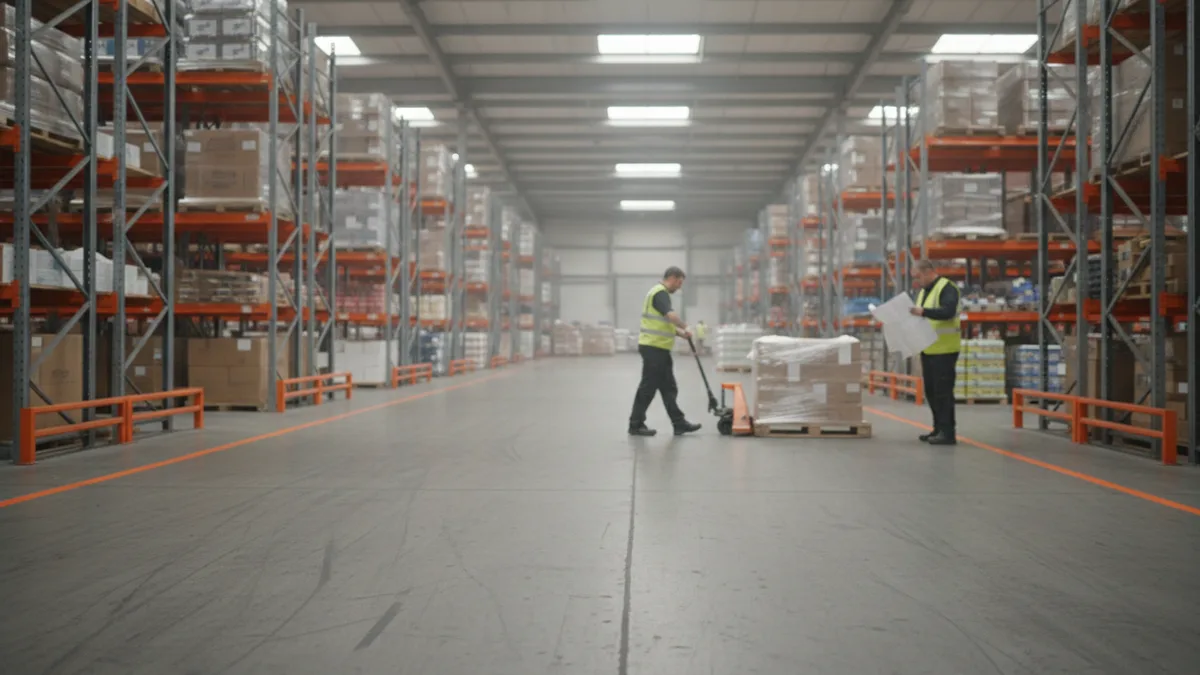
A wholesale or distribution business runs on information. How much stock is in the right bay, what a customer ordered last time, whether a supplier is going to be three days late, which SKUs are quietly eroding your margin because nobody has looked at them properly in two years. Most of that information exists somewhere in your business already. The problem is it is spread across an ERP system that is ten years old, a handful of spreadsheets someone built in a hurry, a shared drive full of PDFs, and the heads of two or three people who have been there long enough to know where the bodies are buried.
That gap between the data you have and the picture you can actually see is where margin goes. It is where picking errors happen, where over-ordering ties up cash, where a customer quietly starts buying elsewhere because fulfilment has become unreliable. AI does not fix that by replacing your systems or your people. It fixes it by connecting what you already have and making the information usable, in real time, by the people who need it.
Why this matters more in Northern Ireland than the headline numbers suggest
Northern Ireland wholesalers and distributors operate in a market with some specific pressures that their counterparts in Great Britain do not face to the same degree. The Irish Sea trading arrangements add a layer of compliance and documentation overhead that sits on top of already tight margins. A food or drink wholesaler moving product between Belfast and Dublin, or sourcing from a GB supplier and selling into the Republic, is managing a paperwork burden that a similar business in Leeds simply does not have.
At the same time, the customer base here tends to be concentrated. Lose one or two significant accounts and it shows up in the numbers fast. That means service reliability, accurate stock availability and responsive order management matter more, not less, than they do in a larger market where you can absorb churn. The businesses that are protecting their position are the ones investing in knowing their operation better, not the ones waiting for a new ERP to arrive and solve everything in three years.
There is also a talent dimension. Skilled warehouse managers, experienced buyers and operations staff who genuinely understand the product range are hard to find and harder to keep. AI does not replace those people. But it does mean a good operations manager is not spending half their week chasing information that a well-connected system could surface in seconds.
The stock problem nobody talks about honestly
Every wholesale business has a version of the same conversation. The warehouse manager says stock is in the system. The sales team says they cannot find it. The accounts team says the valuation looks wrong. And somewhere in a corner of the racking there are pallets of product that nobody quite knows what to do with.
Over-stocking and under-stocking tend to happen at the same time, in the same business, because purchasing decisions are being made on incomplete or stale information. An AI system connected to your ERP, your order history and your supplier lead times can build a demand forecast at SKU level that reflects what is actually selling, adjusted for seasonality, for a new contract you just won, or for the fact that a particular line always spikes in the six weeks before Christmas. That is not magic. It is pattern recognition applied to data you already own, running on a system that sits inside your business and does not share anything with the outside world.
The result is a purchasing team that is buying closer to what is needed, a warehouse that has space where it should have space, and a finance director who stops getting a nasty surprise every time someone does a stock count.
Order processing and the cost of doing it by hand
A distributor handling a few hundred orders a day across email, phone, EDI and a customer portal is doing a significant amount of manual work to turn those orders into pick lists, delivery notes and invoices. When that process is mostly human, errors creep in. A quantity gets transposed. An account number is missing. A delivery address has changed and nobody updated the record. Each one is small. Collectively, they are expensive in staff time, in credit notes and in the goodwill cost of a customer who had to call up to chase a delivery that went to the wrong place.
AI-assisted order processing, connected to your existing systems, can read an incoming order from whatever format it arrives in, match it against the customer account, flag anything that looks wrong before it becomes a problem and route it through your process with far less manual handling. For a Newry-based distributor dealing with cross-border orders that need specific documentation, that kind of automation is not a nice-to-have. It is a genuine operational improvement with a measurable cost saving attached.
Critically, this works with the systems you have. It does not require you to rip out your ERP or rebuild your order management platform. The AI layer sits on top, connects to what is already there and does the heavy lifting on the repetitive, structured work.
Supplier and pricing intelligence that does not live in one person's head
In most wholesale businesses, the commercial knowledge about suppliers, pricing history, contract terms and negotiation leverage sits in a small number of people. When one of them leaves, a chunk of that knowledge walks out with them. When they are on holiday, decisions get deferred or made with incomplete information.
A private AI system can index your supplier contracts, your pricing history, your email correspondence and your purchase order records and make that information searchable and usable by anyone who needs it, with appropriate access controls. A buyer preparing for a supplier review can pull up three years of price movements, delivery performance and any commitments made in previous negotiations in a few minutes rather than an afternoon. That is not a transformation programme. It is a practical tool that makes a specific job meaningfully easier.
The same logic applies to customer pricing. Wholesale pricing structures are often complex, with tiered discounts, promotional agreements and customer-specific terms built up over years. AI can help you audit that structure, identify where margin is leaking because a discount that made sense two years ago is still running, and flag accounts where pricing has drifted out of line with the current cost base.
Where to start if you are running a warehouse in Antrim or Armagh right now
The worst thing you can do with AI is try to do everything at once. The businesses that get a return from it quickly are the ones that pick one process, measure it properly and build from there.
For most wholesalers and distributors, the highest-value starting point is either demand forecasting and purchasing or order processing automation. Both are processes with a clear before and after. You can measure the stock holding reduction, the pick error rate, the time spent on manual order entry. Those numbers tell you whether it is working and give you the basis for deciding what to do next.
The starting point at Verona is an AI Discovery audit. That is a paid engagement, not a free strategy document, because it involves properly understanding your systems, your data and your operation. At the end of it you have a costed, ranked plan that tells you which application to build first, what it will connect to and what you should expect to see from it. Implementation follows from that, building the platform and the first application inside your own environment, on your own infrastructure, with your data staying exactly where it belongs. From there, ongoing support and improvement runs as a managed service. No public AI tools. No commercial data leaving the building.
If you are a wholesaler or distributor in Northern Ireland and you are tired of making decisions on incomplete information, the conversation is worth having.
Want to see what this looks like inside your business?
Book a free 30-minute conversation with Verona AI. We will look at your specific operation and show you where a private AI system, built on your own data, could make the biggest difference first.
Book a free consultationMore from the Verona AI blog
Cut Waste, Tighten Specs and Stop Losing Margin to Batches That Should Never Have Left the Line: Practical AI tools Northern Ireland food manufacturers, production managers and technical teams can put to work right now
Northern Ireland food manufacturers are losing margin to waste, rework and spec failures. See how private AI fixes it without touching public tools.
Build Smarter, Quote Tighter and Stop Losing Margin to Projects That Go Wrong Before the First Spade Hits the Ground: Practical AI tools Northern Ireland contractors, quantity surveyors and site managers can put to work right now
Discover practical AI tools for Northern Ireland construction firms: smarter estimating, safer sites and better project control without the tech overwhelm.

Deliver More, Waste Less and Stop Losing Margin to Routes Planned on Yesterday's Road Map: Practical AI tools Northern Ireland hauliers, freight forwarders and fleet managers can put to work right now
Discover how AI tools are cutting fuel waste, improving delivery times and boosting margins for Northern Ireland hauliers and logistics firms.